Varicose veins treatment without surgery
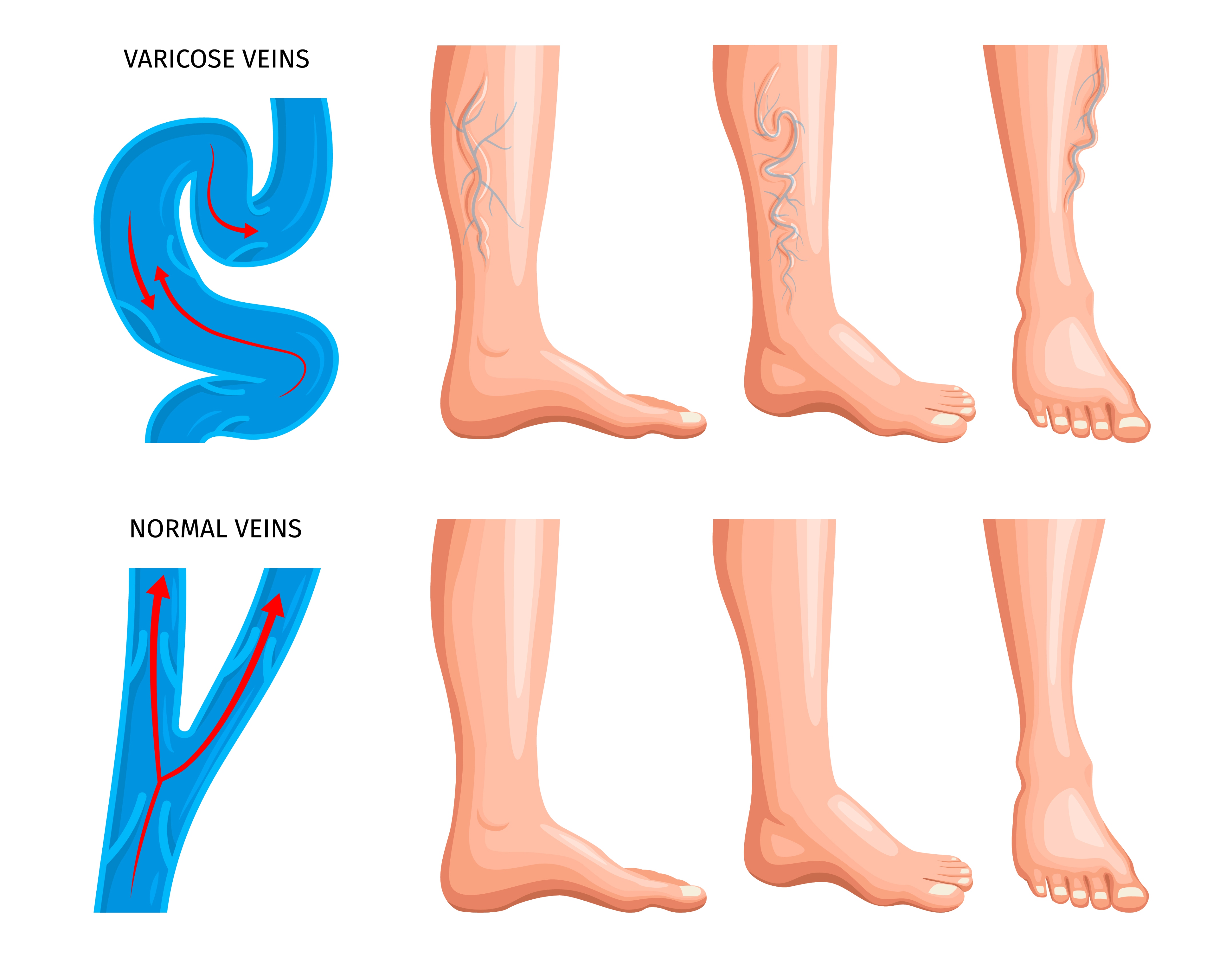
Varicose veins are a condition characterized by the swelling of superficial veins in the legs due to valve dysfunction. This causes blood to flow backward from the deep veins to the superficial veins.
Varicose veins may not cause any symptoms other than a change in the shape of the legs due to the swelling of the veins and capillaries. However, sometimes they can lead to pain or swelling in the ankle area after prolonged standing, or a change in skin color around the ankle. In advanced cases, complications such as bleeding or ulcers can occur.
In many cases, varicose veins only require conservative treatment, such as avoiding prolonged standing, wearing compression stockings, and taking medications like Daflon.
If conservative treatment fails, interventional radiology is considered. Interventional radiology offers a safe and effective alternative to surgery, which requires general anesthesia and involves removing the veins through multiple incisions in the skin. This makes the cosmetic outcome unsuitable for many patients, especially women, and also requires a long recovery period.
If you are experiencing symptoms of varicose veins, such as leg swelling, ankle pain after prolonged standing, or simply a change in leg shape due to swollen veins or capillaries, and if you wish to treat varicose veins without surgery, in a short time, without general anesthesia or hospitalization, we recommend interventional radiology. It offers solutions for this problem, such as laser cauterization of varicose veins, radiofrequency ablation, or local injection of superficial capillaries.
Interventional radiology treatment is performed using a catheter that is inserted through an opening no larger than 2 mm, and the vein is cauterized using laser or radiofrequency. The cosmetic result is much better due to the use of a single small opening in the skin. This treatment is performed under local anesthesia at the interventional radiology center, and the patient returns to his normal life within hours.
FAQS
Acryotherapy completely closes the vein, resulting in a similar outcome to surgical removal.
Closing a superficial vein causes blood to flow into the deep veins of the leg, and this does not lead to any complications.
Two hours after the cauterization procedure, the patient can walk and resume their normal activities. However, strenuous exercise should be avoided for the first two weeks.
This can sometimes happen, and it depends on genetic factors that determine the likelihood of varicose veins recurring. It is also affected by the patient's lifestyle, particularly whether it involves prolonged standing.
The effect begins to appear immediately after the cauterization procedure, as some of the swollen veins start to disappear. However, it takes several weeks or months for the veins to disappear completely. If some small superficial veins remain after cauterization, these veins can be injected with substances that cause them to close and disappear for cosmetic purposes.